
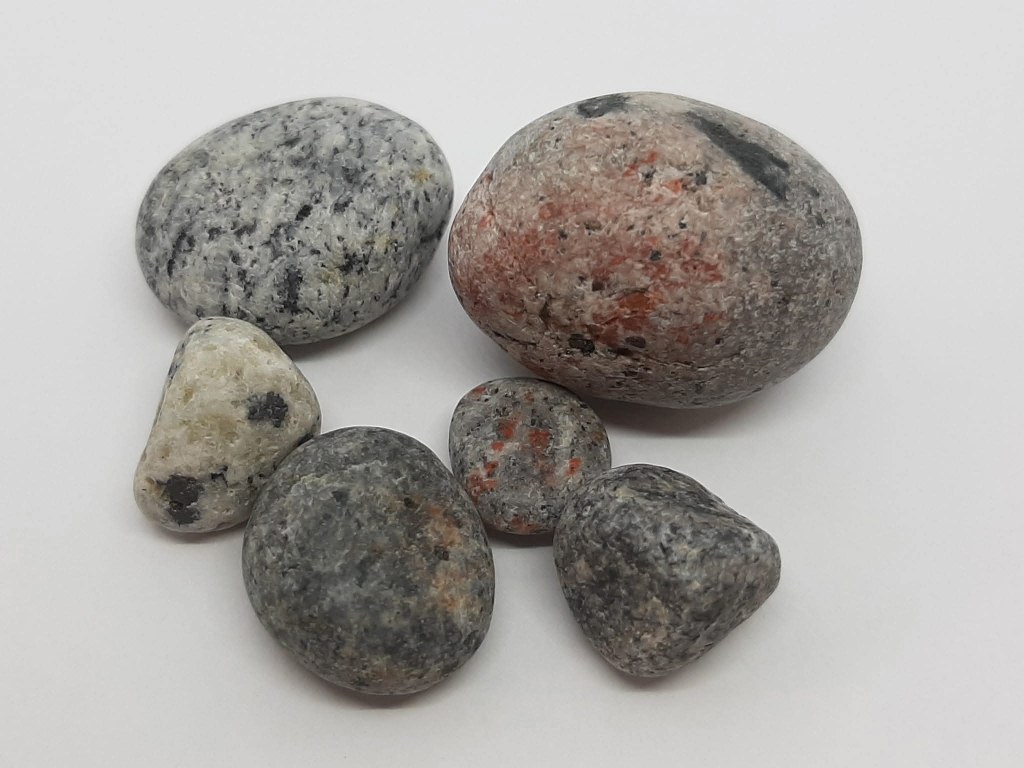
Yooperlite is the trade name for a unique type of pebble found along the shores of Lake Superior in Michigan. In 2018, Erik Rintamaki officially registered the name in the United States for the stones he had discovered. These pebbles are remarkable because they glow beautifully under UV light. Analysis has shown that the fluorescent mineral responsible is sodalite, which is found within a rock called syenite. Some stones also contain small amounts of reddish-orange natrolite.
The pebbles are usually quite small, with larger specimens being rare. They have been naturally smoothed by the abrasive action of water and glacial transport. Interestingly, the stones did not originate in Michigan—they are glacial erratics, carried from their source during the Ice Age. The original source is in Ontario, Canada, at the Coldwell Alkaline Complex.
The name ‘yooperlite’ comes from the nickname for residents of Michigan’s Upper Peninsula, known as “UP-ers” or “yoopers”. Rintamaki registered the name and retained exclusive rights to sell these stones under it to private buyers and selected dealers. While he was not the only person to find them, they have also been discovered in other parts of Michigan, as well as Indiana, Minnesota, Wisconsin, and Illinois, he was the only one legally allowed to use the name. Other sellers marketed the stones under alternative names, the most common being ‘emberlite’. It’s worth noting that the trademark applies only in the USA; outside of the United States, anyone may use the name yooperlite.
These stones quickly became popular, though they were fairly expensive. As often happens with prized and fashionable items, stones resembling yooperlite soon began appearing from outside North America. These look-alikes have the same fluorescent qualities and appear to be syenite, too. The advantage of these alternatives is that they come in larger rough chunks rather than small pebbles, making them more affordable and suitable for items like hand stones and carvings. Carving original yooperlite is challenging due to the small size of most pebbles. There are several types of these look-alikes on the market, reportedly sourced from Pakistan, China, and Brazil, though verified analyses are scarce.
Adding to the confusion, the original finder now also sells yooperlite carvings in his online shop, including spheres and arrowheads, made from larger blocks of Canadian rock, the same source as the original glacial erratics. However, distinguishing these from cheaper Asian alternatives is extremely difficult.
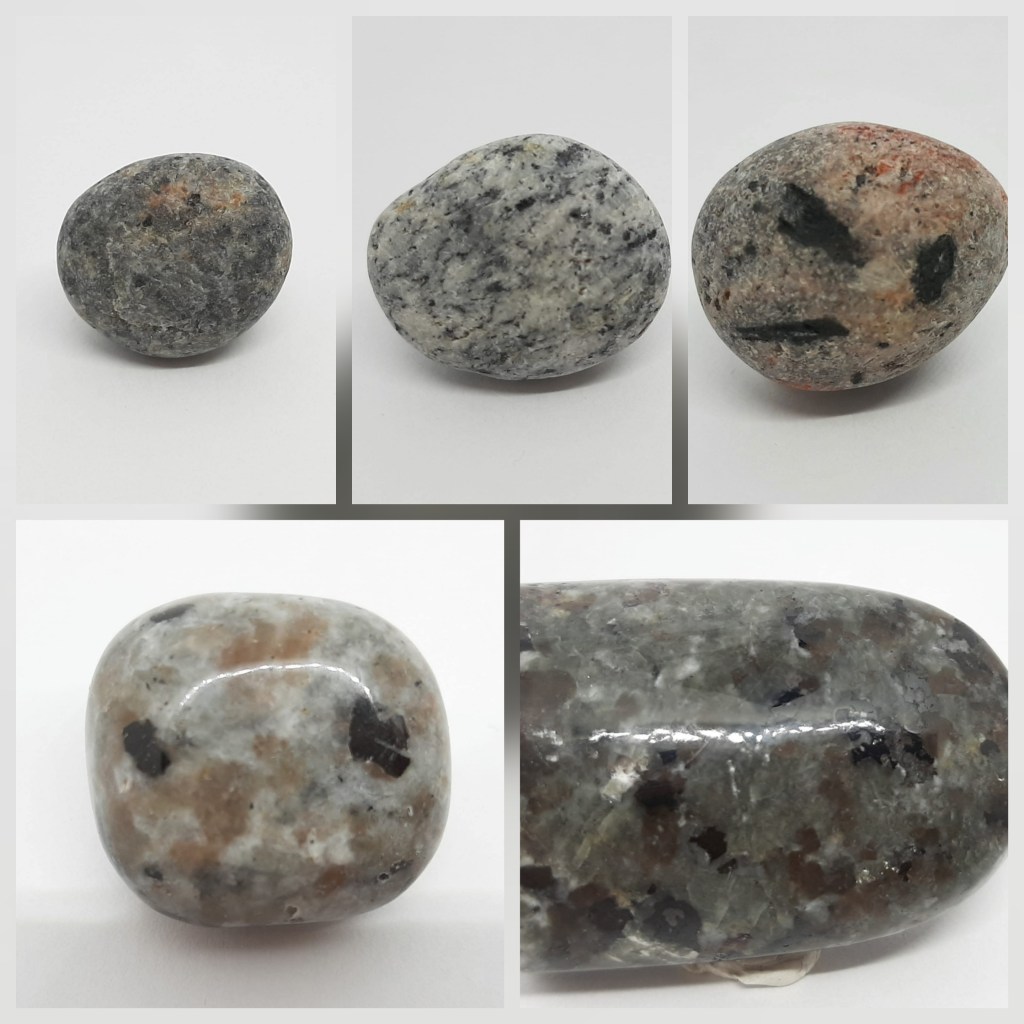
In daylight, the differences between American yooperlite and the look-alikes are more obvious:
American yooperlites are small pebbles and rarely polished.
They have a finer texture, whereas look-alikes often display visible clasts, similar to granite.
Carvings and larger hand stones sold at relatively low prices are almost always made from the look-alike rock.
American yooperlite is more expensive than the alternatives.
Although the name yooperlite is not legally restricted outside the USA (and funny enough, Germany, where it is also a legal trademark for the US stones), its use can be misleading. Many people associate the term with Michigan stones and may assume a product bearing the name comes from there. While the rock type is broadly similar, the source differs. To avoid confusion, it is helpful to clearly indicate when products are made from alternative, non-American/Canadian stones.
The photographs below illustrate the differences between American yooperlite and the alternative rocks.
Sources:
Yooperlite.com
https://www.uspto.gov/trademarks
Mindat.org
 Puffins and Pies