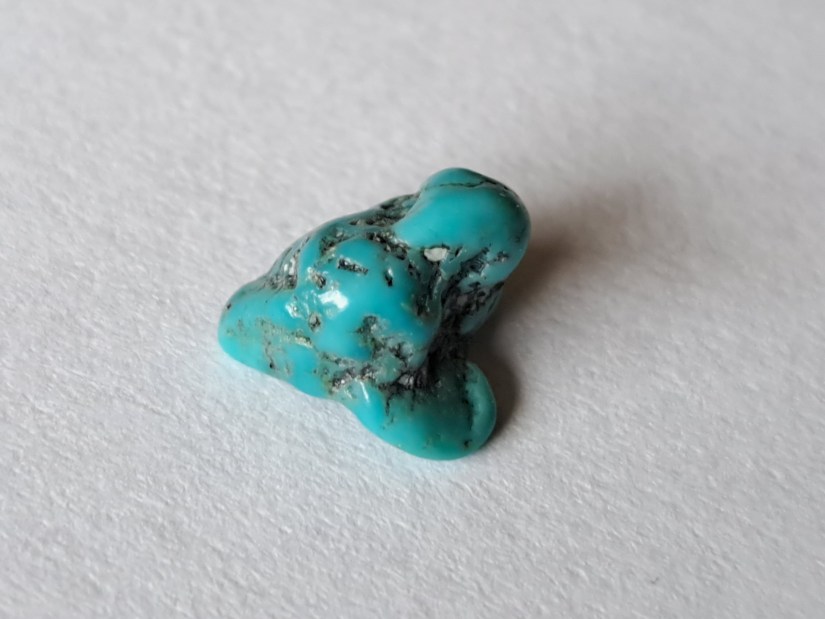
Turquoise is by far one of the most valued, respected, but unfortunately also imitated minerals known to us. The reality is that some of these imitations are exceptionally difficult to detect, even for seasoned experts. In this article, I aim to explore all aspects of turquoise: its history, genuine varieties, and as many synthetic and fake versions as possible, along with tips to help you determine what exactly you’re looking at when you come across a piece.
Turquoise derives from the French turquois, meaning “Turkish”. This is because a significant amount of the material was historically imported into Europe from the Ottoman Empire. Although the name turquoise was only introduced in the 17th century, the mineral has, of course, been known for much longer. As a result, in older texts, it appears under various other names, making it somewhat difficult to determine whether the references are in fact to the mineral we now call turquoise. The ancient Greeks, notably Pliny the Elder, referred to it as κάλαϊς (Kalais), and it is for that reason also known in some circles as kalaiet or kalaite.
You may also come across the term ‘azure spar’, an archaic label used to describe a range of blue minerals, of which turquoise was merely one. Therefore, if this name appears in historical sources, one should not assume it refers to turquoise specifically.
History
The history of turquoise is remarkably rich, and the mineral features in countless stories and traditions across cultures worldwide. While a comprehensive account would go far beyond the scope of this article, what follows is a concise overview of the most significant highlights.
Although turquoise does occur naturally in parts of Europe, it has been known throughout European history primarily as a striking blue mineral originating from Asia, especially from Iran (formerly Persia) and Egypt.
Turquoise has been highly prized for thousands of years. We know that the ancient Egyptians held it in great esteem, using it extensively in jewellery and burial gifts. Magnificent pieces of jewellery featuring turquoise set in gold or carved into scarabs have been discovered in tombs. One of the most famous examples is the death mask of Tutankhamun, which includes inlays of turquoise. Egypt had its own turquoise mines in the Sinai Desert, in use as early as 3000 BCE. These mines also produced copper and were vital to the region. The Egyptians referred to turquoise as ‘mefkat’ and associated it with the goddess Hathor. The area containing these mines was historically known as Ta Mefkat or Khetyou Mefkat. Near the mining sites, archaeologists have uncovered an ancient temple dedicated to Hathor.
In ancient Persia, which largely overlaps with modern-day Iran, high-quality turquoise was widely mined and cherished. The Persians used it in jewellery and amulets, often inscribed. It was also a popular material for decorating the walls and ceilings of palaces, mosques, and other significant buildings. Turquoise was even incorporated into weapons, particularly daggers inlaid with the stone. The Persians referred to it as pērōzah or fayrūzah (also spelled pirouzeh, firouzeh, firoozeh, or firoza), meaning ‘victory’. Across Persia, and much of Asia, turquoise became deeply woven into culture, religion, and architecture, making it a mineral of profound significance. Not only the Persians, but also the Mesopotamian peoples, valued it highly. Further east, in Tibet and India, turquoise held great cultural importance. One of the most famous buildings to feature turquoise is the Taj Mahal in India.
In Tibet and Nepal, turquoise was associated with the sky, due to its vivid blue colour. Interestingly, turquoise does not naturally occur in Nepal, yet for centuries it has been regarded as a symbol of high status. In Buddhist practice, powdered turquoise was used to create religious paintings.
In China, turquoise has been mined and used since the Neolithic period, and numerous legends surround the stone. Particularly in regions rich in turquoise deposits, it developed a deep historical and cultural resonance. It was used for talismans, amulets, jewellery, religious objects, weapons, decorative items, and even as medicine. For a long time, the Chinese believed that turquoise was the fossilised remains of pine trees, a tree of great cultural importance in Chinese tradition. One legend tells of an ancient pine tree that longed to become a dragon. However, a Taoist master told it that it was far too old for such a transformation and could only become stone. Upon hearing this, a storm broke out, the tree shattered, and the pieces turned into turquoise.

During the Middle Ages, turquoise entered Europe via the Silk Road. The trade route passed through what is now Turkey, and the Ottoman Empire became a hub for the trade of this exotic material. Turkish merchants brought turquoise from Persia and sold it to European buyers. This is how the stone came to be known as turquoise, from the French pierre turquois or pierre turques, meaning ‘Turkish stone’.
Turquoise was also highly significant in Central and North America. At archaeological sites associated with the Maya and the Mexica or Nahua peoples (Aztecs), turquoise has been found in jewellery, ceremonial masks, and mosaics. Notably, artefacts featuring turquoise have been uncovered at Chichén Itzá. Among the Aztecs, turquoise was an important cultural symbol and was associated with the fire god Xiuhtecuhtli, who was often depicted with a turquoise head or even a full turquoise body. In the Aztec language, xiuhuitl was the word for turquoise.
Although turquoise did occur naturally in parts of Mesoamerica, the quality was generally lower than the turquoise found in what is now the southwestern United States. For a long time, it was believed that the Aztecs and others imported higher-quality turquoise from the north. However, more recent research has shown that much of the turquoise found at Mesoamerican archaeological sites is indeed of local Mexican origin. When Europeans arrived in the Americas, they began exporting turquoise back to Europe, and a supply of American turquoise was established.
Today, the southwestern United States remains home to numerous turquoise mines. Indigenous peoples of the region, including the Navajo, Hopi, Zuni, and N’de (Apache), have long recognised the importance of this mineral. For these cultures, turquoise was often associated with life. The Earth was seen as a living entity, and the stones that came from it were considered alive as well. Turquoise was believed to be alive due to its sensitivity to moisture and temperature, which could cause the stone to change colour. Its blue hue evoked the sky and water, and it was thought to have the power to influence the weather. It provided protection to warriors, improved their performance in battle, and was used in divination practices. Native American groups had already been mining turquoise for centuries before European settlers arrived. The oldest known turquoise mines in the Americas are in the Cerrillos district of New Mexico.
When the Spanish entered the region, their primary focus was not on turquoise, although they did take an interest in it. Their main goal was to extract metals such as copper, gold, and zinc, the presence of turquoise was seen as an indicator of such valuable resources in the ground.
In Europe, late Neolithic turquoise artefacts have been discovered at Orlovo in Bulgaria.
Turquoise: Chemistry and Geology
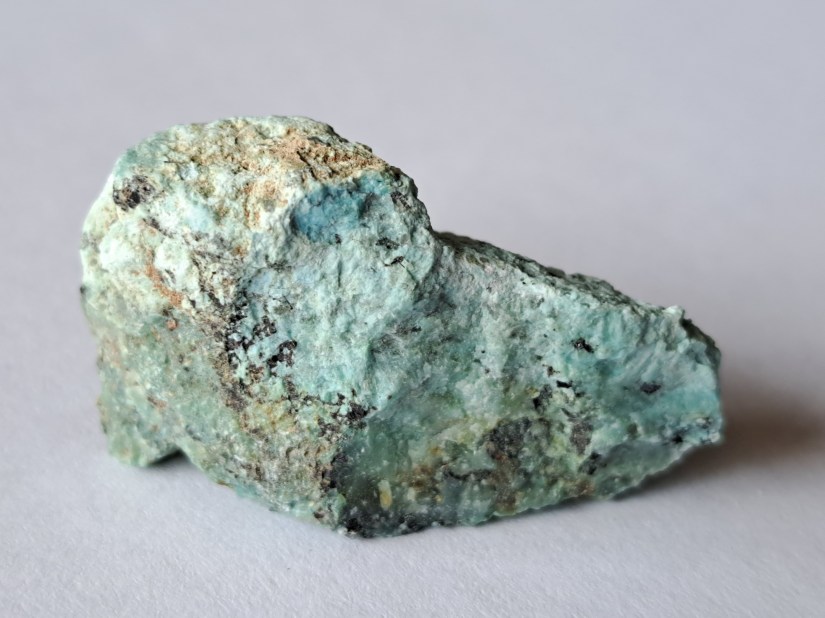
Turquoise is a secondary copper mineral, a copper–aluminium phosphate. The term secondary means that it does not form directly from magma or lava, but rather precipitates from mineral-rich water that has leached elements from surrounding rocks and redeposited them elsewhere as turquoise. For turquoise to form, there must be a sufficient presence of aluminium, phosphate, and copper.
Turquoise forms most readily in zones where hot, mineral-bearing fluids can circulate through potassium-rich rocks. This process is often triggered by magmatic intrusions, where molten rock rises and interacts with existing geological formations. These so-called potassic alteration zones are frequently indicators of economically valuable ore deposits, particularly copper. Under such conditions, metals often crystallise in porphyritic form: large crystals or nuggets embedded in a finer-grained matrix rock.
In addition to this hydrothermal formation process, turquoise also commonly forms in arid environments rich in copper-bearing rock. Weathering, driven by limited water action in these dry climates, breaks down the parent rock and allows turquoise to form nearby as a secondary mineral deposit.
The chemical formula of turquoise is: CuAl₆(PO₄)₄(OH)₈ · 4H₂O
High-quality specimens have a Mohs hardness between 5 and 6. Turquoise belongs to the triclinic crystal system, but well-formed crystals are rarely visible to the naked eye. It typically occurs as fine-grained, massive layers rather than as distinct crystals. Its colour ranges from blue to blue green in various hues.
Turquoise is the type mineral of the turquoise group. Recent mineralogical research has shown that much of what is commercially or casually identified as turquoise is often not pure turquoise in a chemical sense. Turquoise is the copper-rich endmember of a solid solution series within the turquoise group, with planerite representing the opposite endmember. In this series, the amount of copper varies: the more copper present, the closer the composition is to pure turquoise; the less copper, the more it resembles planerite.
Turquoise also forms a solid solution series with another mineral in the group, chalcosiderite. In this case, aluminium is gradually replaced by iron as the composition shifts towards chalcosiderite. Other members of the turquoise group include aheylite and faustite. Faustite is the zinc-rich endmember of the turquoise–faustite series. A continuous series also exists between faustite and planerite.
Turquoise is typically found in areas where copper is abundant and frequently occurs alongside other copper minerals. The higher the copper content, the bluer the turquoise appears. The presence of iron, or dehydration due to heating, can result in greener hues.
Turquoise commonly forms crusts or vein fillings within fractures, but it can also occur as botryoidal (grape-like) nodules. In some cases, it is found as a replacement mineral in pseudomorphs, where it has taken the place of minerals such as beryl, apatite, or even within fossilised material.

Localities
The most renowned sources of turquoise are the Sinai Peninsula, Iran, the United States, Tibet, India, Australia, and China. In Europe, turquoise has been found in England, Spain, Bulgaria, France, Portugal, Belgium, and Germany.
In the United States, the southwestern region, particularly the states of California, Nevada, New Mexico, and Arizona, is home to dozens of turquoise mines. Some of the most famous localities include the Kingman Mining District, Sleeping Beauty Peak District, and the Royston Mine. These areas are known for producing turquoise of excellent quality.
In China, the finest and most famous turquoise comes from the provinces of Hubei and Tianhu.
Iran, historically considered the source of the world’s highest-quality turquoise, contains several significant mining areas. The Nishapur (or Neyshabur) mines are among the oldest known turquoise mines in the world. Other key producing regions in Iran include the provinces of Kerman and Semnan, which also yield large quantities of turquoise.
Turquoise Treatments and Imitations
Turquoise is a porous mineral, which means it readily absorbs moisture and oils from the skin when worn. Over time, exposure to sunlight can cause turquoise to dry out, fade, or even crack. Due to its sensitivity and relatively soft structure, turquoise is often treated to improve its durability and appearance for use in jewellery.
Because turquoise has long been a highly sought-after and beloved gemstone, it has also been widely imitated throughout history. These imitations are not a modern phenomenon; they date back thousands of years.
The ancient Egyptians developed a convincing alternative in the form of sintered quartz-based ceramics, known as Egyptian faience (or tjehenet). Whether this was intended specifically as a substitute for turquoise or simply as an artistic material remains uncertain. However, great care was taken to reproduce the distinctive turquoise blue colour.
Later, glazes and glass were also used as turquoise substitutes. Other cultures developed their own forms of imitation:
The Chinese and the Maya replicated the blue hue of turquoise with synthetic pigments known as Han blue and Maya blue, respectively.
In Syria, archaeologists have found beads that appear to have been altered to mimic the colour of turquoise.
Modern Imitations and Treatments
Today, the market is flooded with imitation turquoise. These come in many forms, ranging from synthetic turquoise to outright fakes. Even among naturally occurring turquoise, there are important distinctions between untreated, natural specimens and those that have undergone stabilisation or other enhancements. There are also products made from reconstituted turquoise, which involves bonding small fragments of real turquoise with a resin or binder to form a composite material.
Here is an overview of the main types of treated and imitated turquoise:
Treatments
Stabilisation
Turquoise is a relatively soft and porous mineral, which makes it difficult to work with and unsuitable for jewellery in its untreated form. To make it more durable and workable, turquoise is often stabilized, a widely accepted treatment in the gem trade. Without stabilisation, turquoise is generally not robust enough for use in wearable pieces.
Materials used for stabilisation include synthetic resins (such as Opticon), wax, oil, epoxy, glass, or plastic. The degree of stabilisation required depends on the origin, quality, and intended use of the stone. For a display specimen, collectors typically prefer turquoise in as natural a state as possible, ideally unstabilised. However, for cutting and setting, the stone must be stable.
High-quality turquoise requires minimal treatment, but some stabilisation is still necessary to protect it from sweat, moisture, and skin oils during wear. The more porous the turquoise, the more extensive the stabilisation needed. Some treatments, such as with epoxy, may alter the colour slightly (e.g., darkening or creating mottled patches) and can also affect properties such as hardness, specific gravity, and refractive index.
A well-executed stabilisation process will leave minimal visible traces and change the stone’s natural properties as little as possible. Today, much turquoise is treated using the Zachery process, a proprietary technique involving immersion in a special solution followed by heat treatment. The exact formula remains a trade secret.
Dyeing
Most people associate turquoise with a vivid sky-blue colour, often described as “robin’s egg blue” or “Persian blue” — the colour of a robin’s egg. This is considered a hallmark of high-quality turquoise. However, not all natural turquoise displays this colour.
During stabilisation, it is common for lower-grade stones to be dyed to achieve the desired turquoise hue. Dyeing improves the visual appearance of inferior material but should always be disclosed at the point of sale. Unfortunately, this is not always the case.
Reconstitution (Composites)
During the cutting of turquoise, a large amount of waste material is produced in the form of small fragments. These are often collected and repurposed into blocks of reconstituted turquoise. This may involve either bonding intact pieces with a binding agent, or pulverising the fragments, mixing them with a binder (e.g., resin), and compressing them into solid blocks.
Unfortunately, this process also creates opportunities for misrepresentation. Some products sold as “reconstituted turquoise” have been shown through testing to contain very little or even no real turquoise at all. Even those made with genuine fragments are sometimes mixed with other materials such as pyrite, iron filings, copper, or dyed minerals.
A well-known example is ‘Mojave turquoise’, produced in the famous Kingman Mine in Arizona. It is a composite material made from brightly coloured fragments — often purple, red, green, or yellow. While some Mojave turquoise does contain real turquoise, many of the cheaper variants on the market today do not. These are often mislabelled as Mojave turquoise, even though they contain no genuine turquoise, and would more accurately fall under the category of imitations.
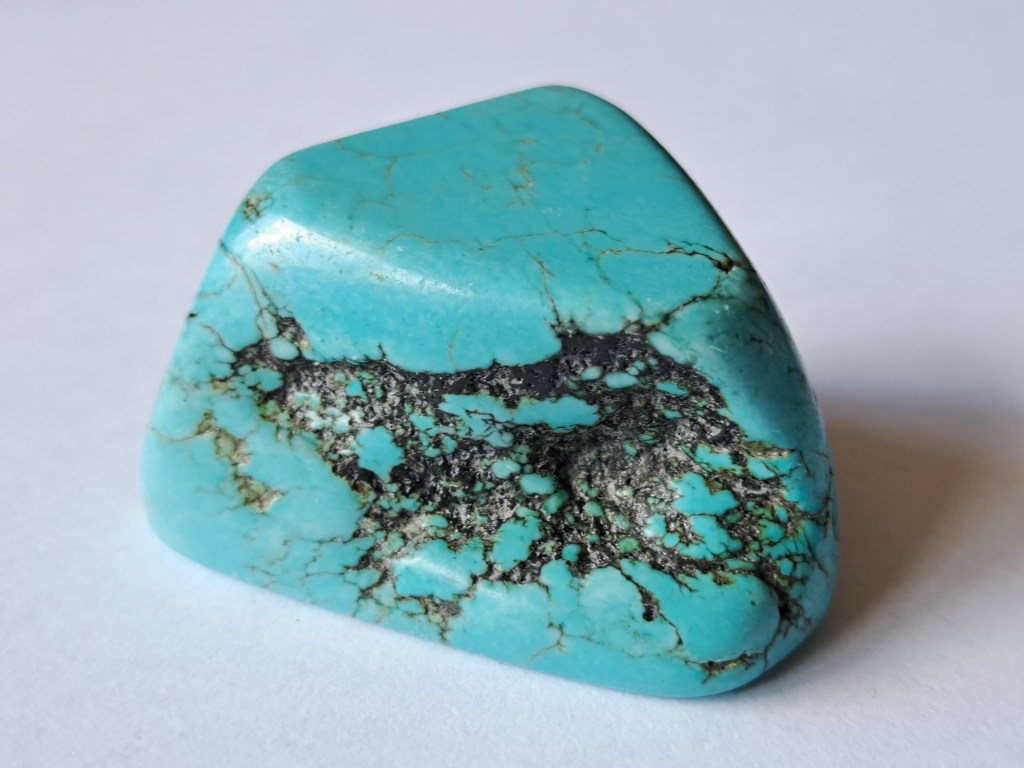
Black or brown material found in cavities or veins within turquoise is often interpreted as evidence of authenticity. These may be remnants of the host rock matrix, or minerals such as mica, calcite, hematite, pyrite, or copper. However, these can now be artificially added to reconstituted or dyed material, meaning they can no longer be relied upon as proof of authenticity. In some cases, cavities are even filled with cement, paint, or powdered copper to create a more convincing appearance.
‘Chalk Turquoise’
The term chalk turquoise refers to extremely low-grade turquoise-bearing chalky rock. It is very soft, highly porous, and completely unsuitable for cutting or jewellery use in its natural state. However, it is inexpensive, and therefore often ground into powder, dyed, mixed with glue, and pressed into blocks. These blocks are then sold as turquoise or used in imitation jewellery. This practice is widespread in mass production and lower-end markets.

Imitations
Synthetic Turquoise
A material is considered synthetic if it shares the same chemical composition as a natural mineral but is man-made. In the 1970s, Pierre Gilson developed a turquoise-like material that resembled natural turquoise in many respects. However, it contained a binding agent that does not occur in natural specimens. Strictly speaking, this means it is more accurately classified as a simulant, rather than a true synthetic turquoise, though it is commonly referred to as synthetic by most.
Other materials wrongly marketed as synthetic turquoise include Reese Turquoise, neolite, and neo-turquoise.
In the 19th century, a material known as Vienna turquoise was produced both in Austria and England. This imitation was made by precipitating aluminium phosphate from a solution, compressing it into solid form, and dyeing it with copper hydroxide in an oleic acid solution.
Dyed Minerals
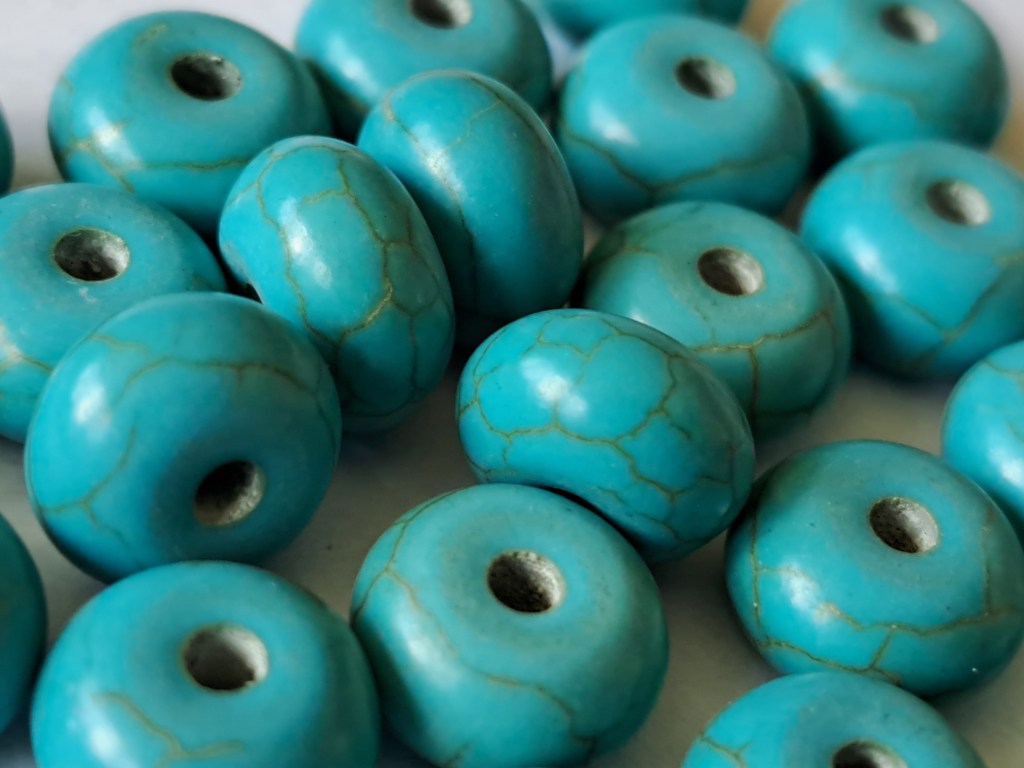
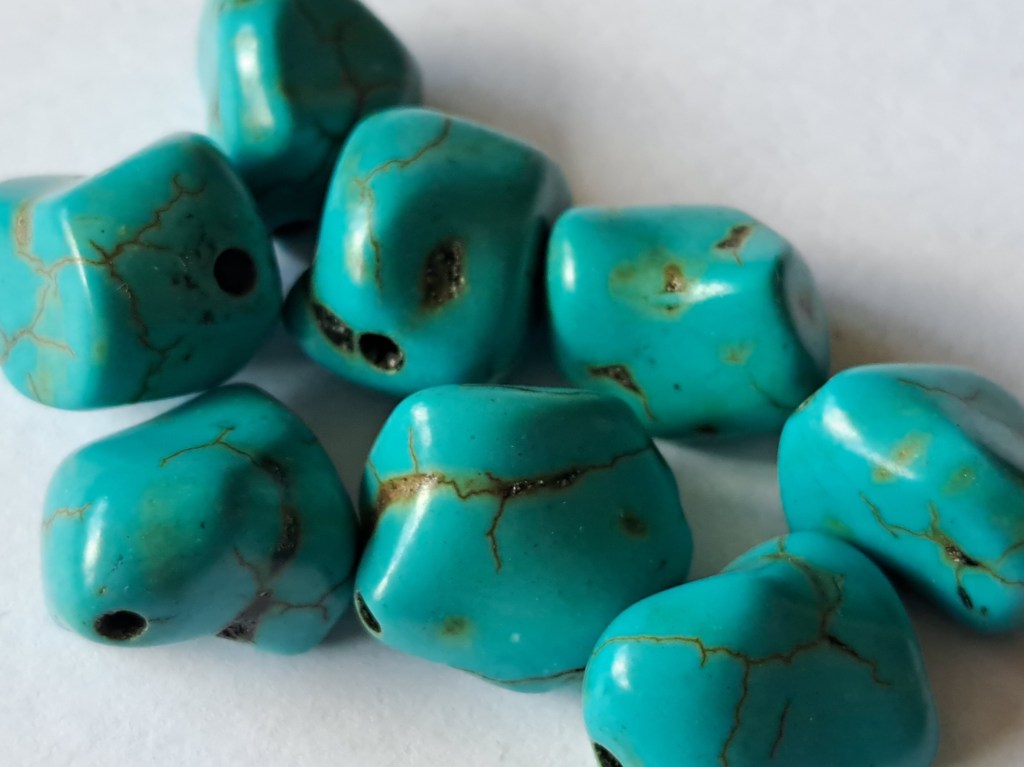
One of the most common modern imitations involves dyeing other minerals blue to resemble turquoise. The best-known examples include:
Dyed howlite (sometimes misleadingly sold as turquenite) and dyed magnesite.
Other materials that have been dyed to imitate turquoise include: Calcite, marble, dolomite, gibbsite and (fossilsed) ivory.
These dyes vary in chemical composition. The most common colouring agent used today is cobalt phthalocyanine. In the past, pigments like Prussian blue were also widely used.
To test for dye, one can sometimes wipe the surface with a cloth soaked in acetone or another solvent. If dye has been applied, it may leave blue traces on the cloth. However, modern dyes are often more resilient, and in many cases, the colour only begins to dissolve after prolonged soaking.
Most dyed stones are only coloured on the surface. When broken, the interior will usually be white or paler blue. With small objects, such as beads, or very porous stones, the dye can penetrate deeper, making them harder to detect.
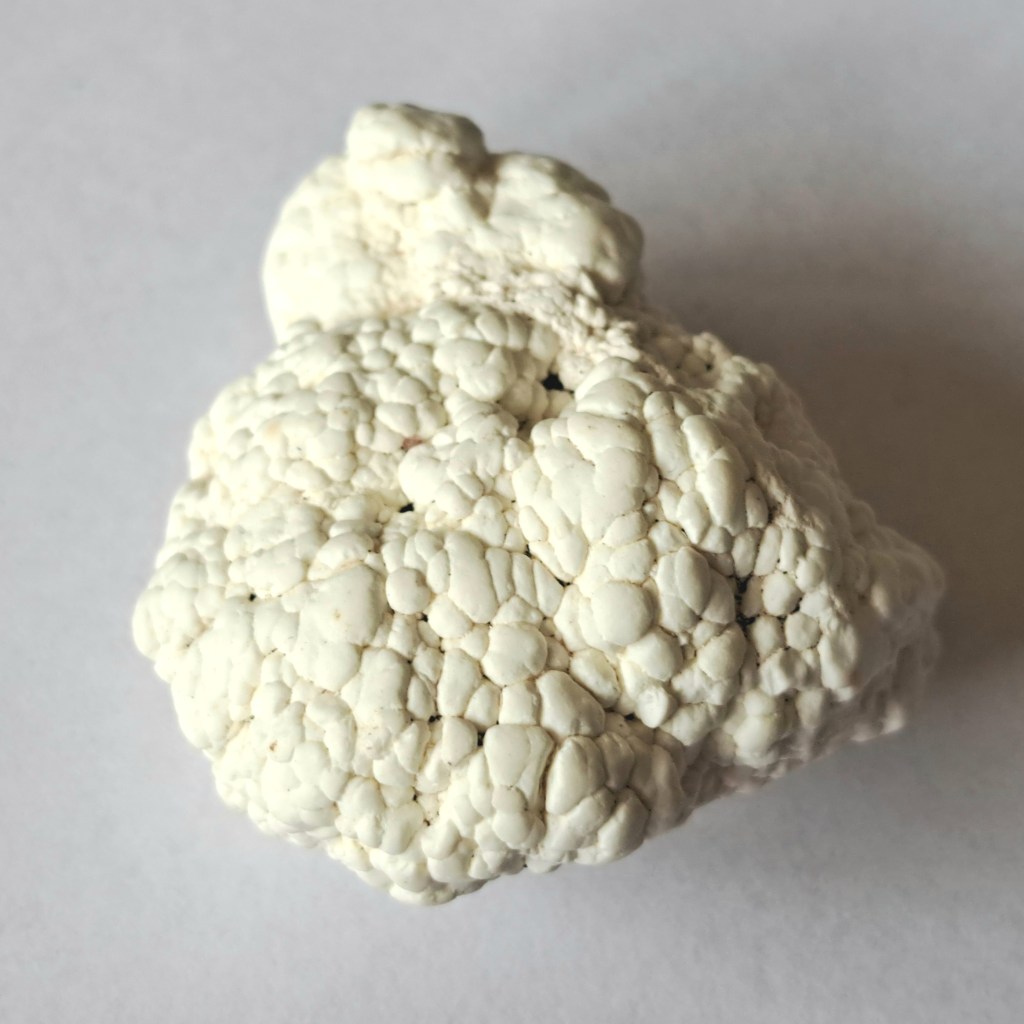
Because howlite and magnesite often form in nugget-like shapes, they can strongly resemble turquoise in its raw form, especially material from the United States.
In China, a material called Wulanhua turquoise or Ulan flower turquoise, a deep blue stone with prominent black veining, is increasingly popular. Imitations of this are now being made by dyeing barite and calcite fragments, then assembling them into composite blocks.
Other Minerals Sold as Turquoise
Some minerals naturally resemble turquoise and are often mislabelled, whether intentionally or accidentally. For example:
– A polished specimen presented as “turquoise from Madagascar” was recently tested and found to be variscite, not turquoise.
– Chrysocolla, another copper mineral, is sometimes misrepresented as turquoise.
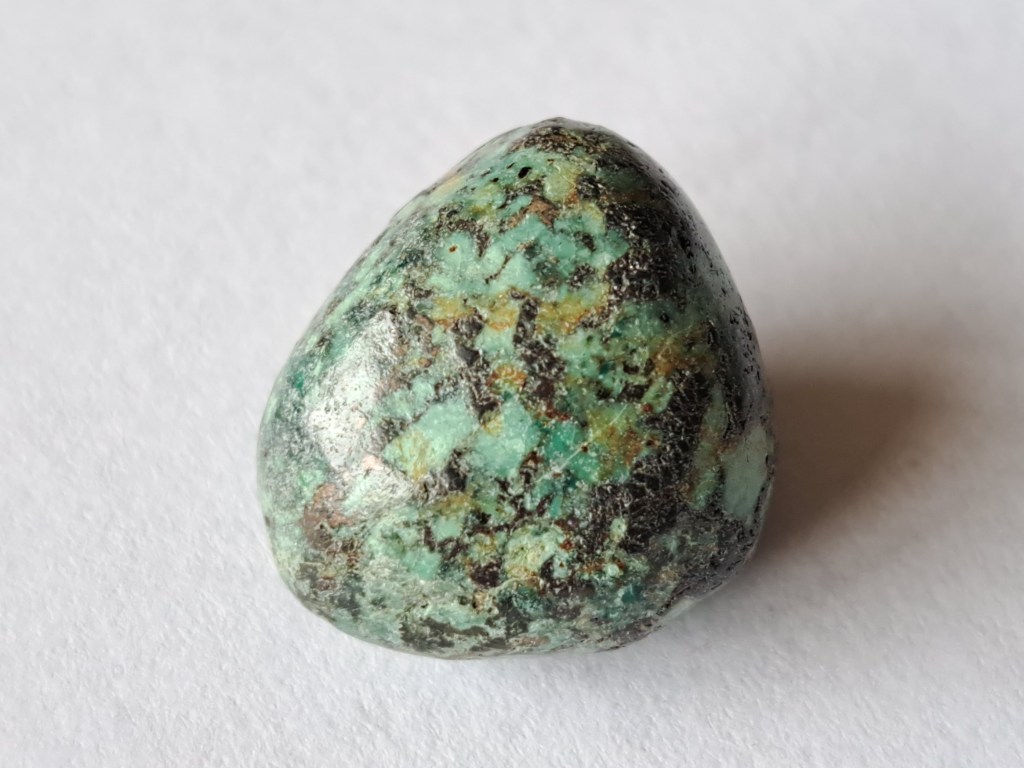
– ‘African turquoise’ is actually a type of jasper, not turquoise.
– Sugilite is sometimes marketed as purple turquoise, but as you now know, turquoise never occurs naturally in purple.
– ‘White Buffalo Turquoise’ is not turquoise at all. It’s a mixture of quartz, calcite, dolomite, and alunite from Tonopah, Nevada. The name was chosen for marketing reasons: the white buffalo is a sacred symbol in many Native American traditions, and turquoise is culturally significant in the same communities.
– Howlite is sometimes sold as ‘white turquoise’.
– Gibbsite is sometimes sold as-is or dyed and marketed as ‘spiderweb turquoise’.
Artificial / Man-Made Fakes
Entirely artificial materials, such as clay, plastic, ceramics, compressed and dyed howlite powder, barium oxide, or gypsum, are also used to imitate turquoise.
Many of the cheap ‘dyed howlite’ products on the market are, in fact, not solid howlite at all, but instead consist of compressed powders, clay, or chalk. Sometimes black lines are painted to mimic the natural veining seen in real turquoise.
These types of material fall under the category of completely fake. We can also include here the previously mentioned composite stones that contain little or no real turquoise at all, even if marketed as reconstituted turquoise.
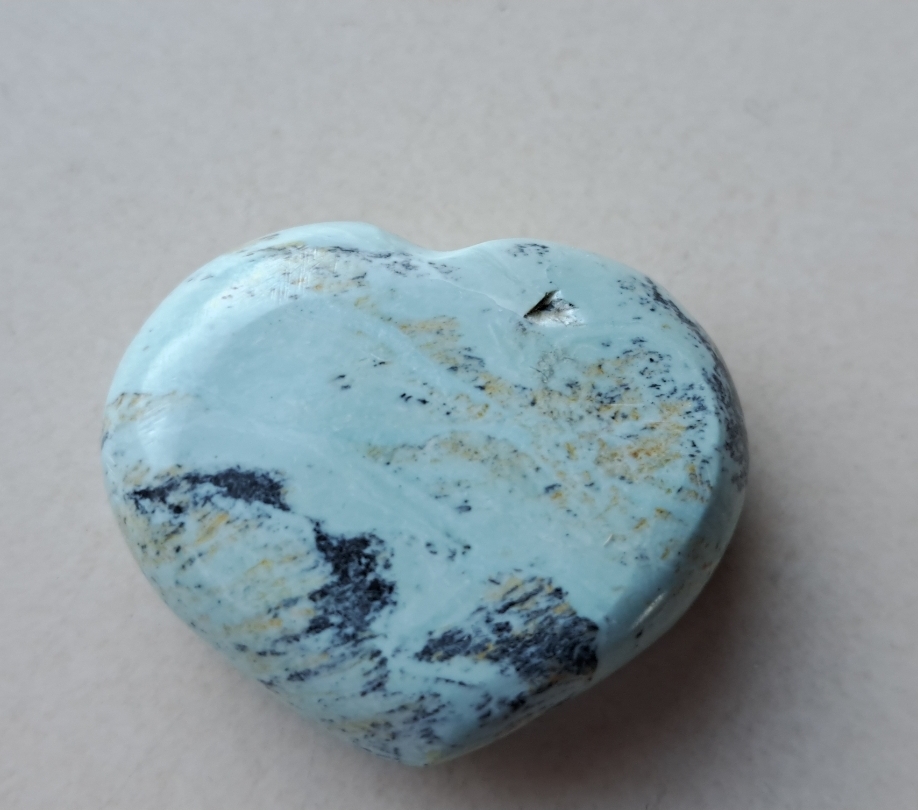
Gallery with examples:



Testing Methods
If you have a piece of turquoise at home, naturally, you’ll want to know whether it’s genuine and whether it has been treated. Unfortunately, this isn’t always a simple or straightforward question to answer.
As you’ll have gathered by now, turquoise is a highly variable mineral, and a wide range of treatments and imitations exist. Some fakes are so obvious that they can be spotted from a mile off, while others are so skillfully produced that even experts require specialised equipment to assess them accurately. Most of us don’t have such instruments at our disposal, so we have to rely on simple at-home methods and careful observation.
In the case of turquoise, it’s often a combination of tests, rather than one definitive method, that can bring you closer to the truth.
Hardness Test
Genuine, good-quality turquoise has a Mohs hardness of 5 to 6. By comparison: Magnesite and howlite are softer, with a hardness between 3.5 and 4.5.
Using a simple scratch test (ideally in an inconspicuous area), you can sometimes distinguish between these materials.
Note: The massive form of howlite, the type commonly used as an imitation for turquoise, has a Mohs hardness of 3.5 to 4.5. However, if you look at resources such as mindat, you may see a hardness value of 6 listed. This figure refers to the extremely rare crystalline form of howlite, not the massive, porous variety typically encountered in the gem trade.
Specific Gravity (Density)
Magnesite has a slightly higher specific gravity than turquoise. Howlite is more difficult to distinguish on this basis, as its specific gravity is quite close to that of turquoise.
This test is subtle, but with precise scales and a method for water displacement, it can give additional clues.
Colour Assessment
While colour is a subjective factor and can vary considerably, many dyed stones, particularly howlite, display a very bright or unnatural blue. With experience, these colours become easier to spot. However, beware: some natural American turquoise can also have a vivid blue colour, so colour alone is never conclusive.
As mentioned earlier, acetone can be used to test for dye. Apply a small amount to a cotton swab and gently rub a discreet area. If the colour comes off, it is likely a dyed imitation.
Natural turquoise should not be affected by acetone in the short term, but extended soaking can dissolve stabilising agents (like resins or waxes).
Note: A stabilised piece that has been tested with acetone may no longer be suitable for jewellery use afterwards.
Price
This is a tricky one, but genuine turquoise, especially untreated and high-quality specimens, is expensive. While high cost is no guarantee of authenticity, a very low price is often a red flag. A ‘turquoise’ bead bracelet for £5 is highly unlikely to be genuine
UV Light
Certain dyes and imitation materials may fluoresce under UV light (longwave). Natural turquoise will not fluoresce. If your sample glows, it may have been dyed or may not be turquoise at all.
Magnet Test
Turquoise itself is not magnetic. However, pure copper in turquoise is paramagnetic, meaning it reacts subtly to a strong magnetic field.
You can try this experiment:
Place your stone on something lightweight that floats (e.g., a piece of styrofoam).
Let it rest still in the centre of a bowl of water.
Bring a strong magnet close to the stone without touching the water.
→ If the stone is genuine turquoise, it may drift slowly toward the magnet.
→ Howlite does not respond this way.
Caveat: Some other copper-bearing minerals (like chrysocolla or even magnesite) may also react, so this test is not definitive for turquoise.
Refractive Index
Every mineral has a specific refractive index: the way it bends light.
This can be measured using a refractometer. While most people won’t own one, a gemmologist or reputable jeweller might be able to carry out this test for you quite easily.
Final Thoughts
By combining the results from these various tests, you can begin to build a more complete picture of what you’re dealing with. Whenever purchasing turquoise, don’t hesitate to ask the seller questions: ‘What is the origin of the stone?’ ‘Has it been treated in any way?’
A trustworthy seller should be able to answer these questions with clarity.
That said, it is often very difficult to confirm authenticity at home with 100% certainty.
These tests can often help to identify fakes, but confirming a stone is truly genuine and untreated may require professional lab testing. It’s a bit of a paradox, but when it comes to turquoise, proving a fake is easier than proving authenticity beyond doubt.
 Puffins and Pies