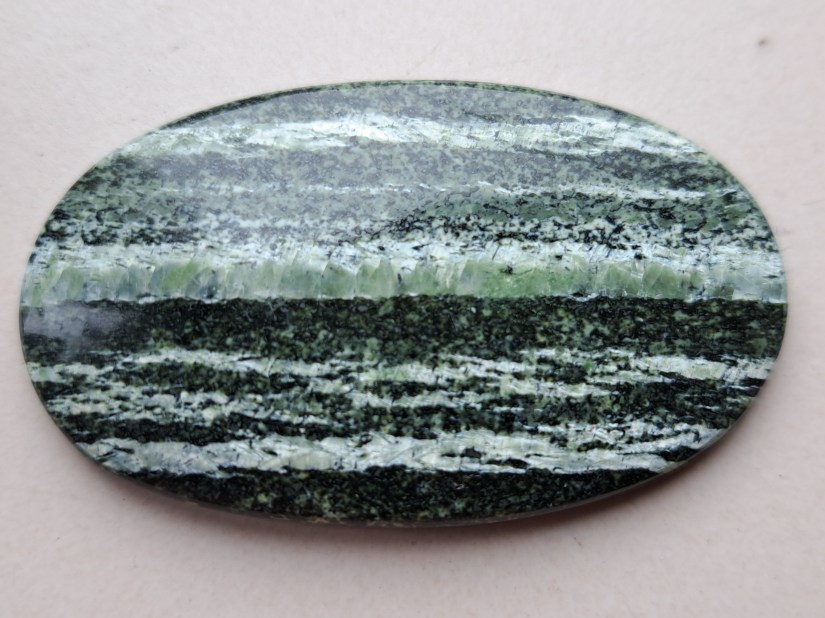
Swiss opal is a combination of chrysotile (white asbestos) and ‘serpentine’.
Serpentine is a group of minerals, chrysotile being one of them. Other well known members of this group are lizardite and antigorite. Most stones that are being called serpentine or ‘serpentine jade’ are actually serpentinite, a type of rock that consists predominantly of serpentine minerals. Serpentinite can contain chrysotile, which is a type of asbestos. Asbestos in serpentine is mainly concentrated in clearly visible bands/layers. Outside these layers it can occur in very small neglectable quantities. These asbestos layers do not occur in all types of serpentinite.
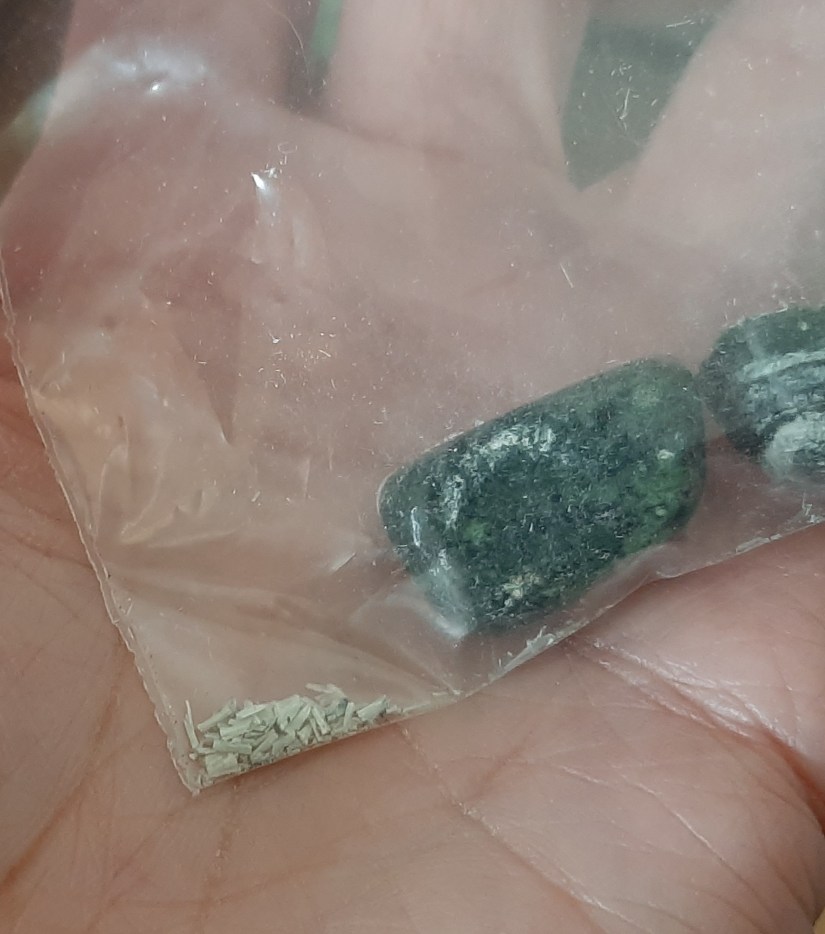
One specific variety, dark green serpentinite with clear white layers of chrysotile is being marketed under the trade name ‘Swiss opal’. This name gives you no clue at all about the real contents of this stone. It is not from Switzerland and has nothing to do with opal. So the name doesn’t make any sense at all. Other trade names for this are ‘lizard skin jasper’ and ‘green zebra jasper’. Most sellers promise you that polished pieces of Swiss opal are harmless. That is not true. Asbestos cannot be polished, so these white layers will never become smooth and they can potentially lose fibers after polishing. Besides that… what if you drop the stone or it breaks? In the below photos you can clearly see the loose asbestos fibers in a damaged tumblestone. It does not matter whether this is polished or rough, it is asbestos, so it has to be handled with care and is not suitable for children.

 Puffins and Pies