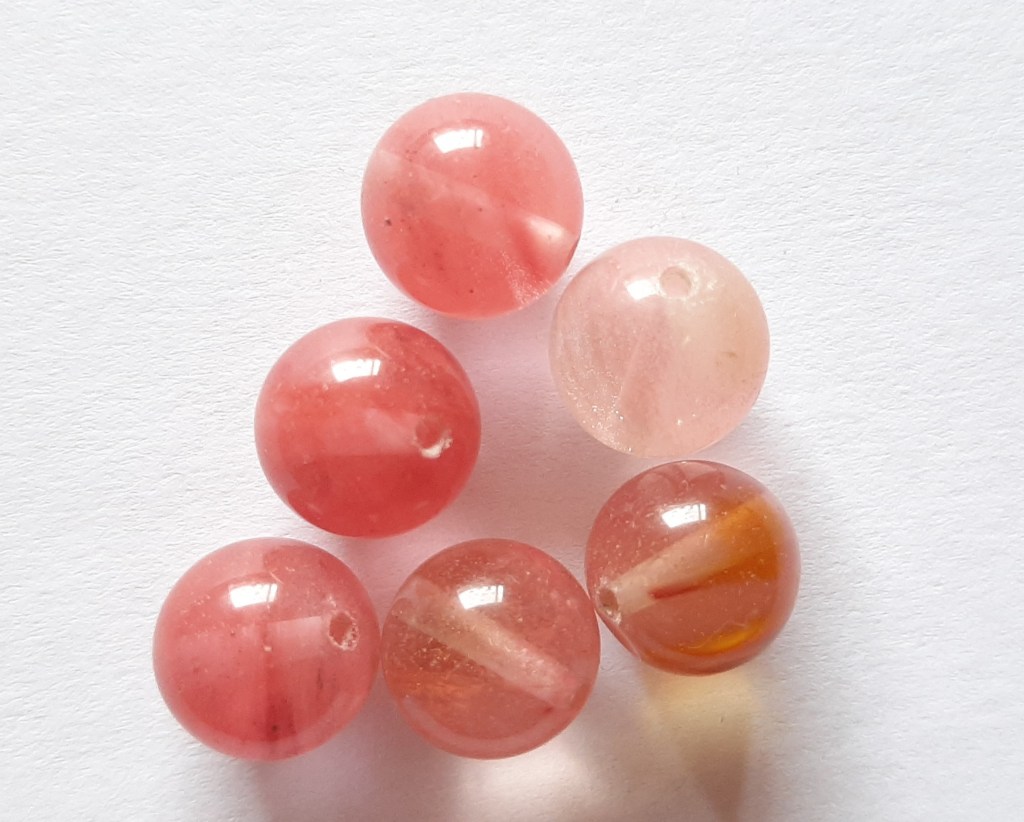
This is an unofficial name for quartz that is coloured red by inclusions of iron/haematite. However, nowadays this name is mainly used for a man-made glass with red colouring, which is sold under various names such as strawberry quartz, cherry quartz, raspberry quartz and cherry opal.
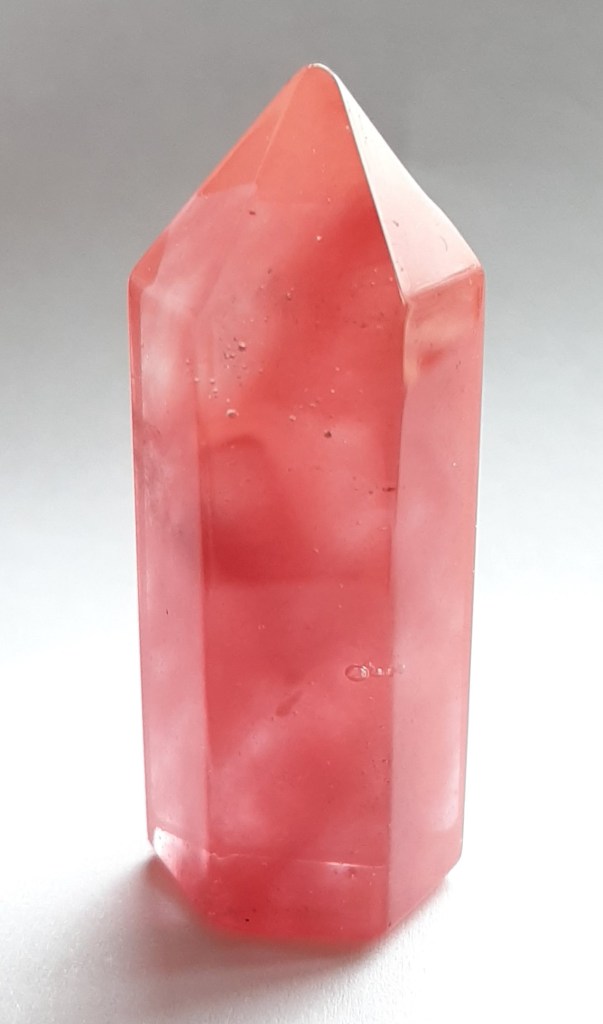
Sometimes it is claimed that the material is “smelt quartz”, but that is, of course, just a nice sales pitch. If you think about it that way, all glass is melted quartz, because that is exactly what this “strawberry quartz” is… simply coloured glass.
It can be recognised by a number of characteristics:
- The hardness is slightly lower than that of genuine quartz; glass “strawberry quartz” can be scratched with a real quartz point and with a good steel knife or nail.
- Air bubbles are often visible.
- It is usually sold as carvings (skulls, obelisks, hearts, angels, pendants, beads). In its uncarved, raw form it shows a glassy fracture and never crystal formations.
- The colour distribution appears as streaks or cloudy areas within the glass.
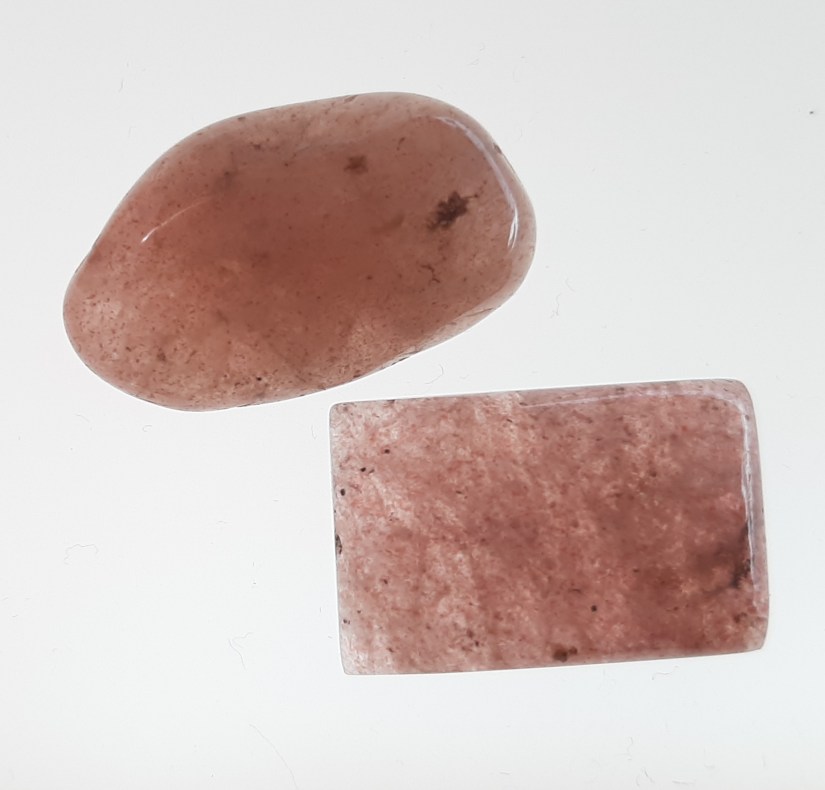
Natural strawberry quartz does also exist. This is usually haematite quartz or “red” aventurine (recognisable by the silvery sparkles in the stone). These are less vividly red than the man-made variety, and the colour distribution is different.
 Puffins and Pies