
Hold on a moment… Weren’t we going to keep things scientific here? Indeed, we were, but I wouldn’t want to deprive you of this fascinating piece of history. The use of poison to eliminate rivals is as old as humanity itself. As early as prehistoric times, arrowheads were dipped in poison to inflict greater harm on enemies. Historically, there were three primary sources of poison: plants, animals, and minerals, including certain stones.
For centuries, poisoning was a common occurrence among the elite and nobility. It was considered an efficient, discreet, and relatively clean method of removing a rival, often leaving little or no trace. Kings, emperors, and other rulers were constantly on guard, ever fearful of someone eyeing their throne and attempting to hasten their demise with a tainted meal.
Food, logically, was the easiest route for an assassin. This made the role of a cook a dangerous occupation. On the one hand, you were trusted with your lord’s life; on the other, if something went wrong, yours might be the head on the chopping block. Naturally, noblemen took precautions to avoid falling victim to such schemes. They often employed food tasters: individuals tasked with sampling a dish or drink before it reached the ruler. In addition, dining tables might feature unusual objects, each with a rather special purpose.
Bezoar
Fans of Harry Potter might already be familiar with this curious term. In Harry’s very first Potions lesson with the formidable Professor Snape, he is asked where one might find a bezoar. Harry is stumped, but Hermione confidently replies: ‘It comes from the stomach of a goat’. In folklore and early medicine, the bezoar was believed to protect against poison. This knowledge proves invaluable later in the story, when Ron is accidentally poisoned at a dinner hosted by Professor Slughorn, and Harry saves him by placing a bezoar in his mouth.
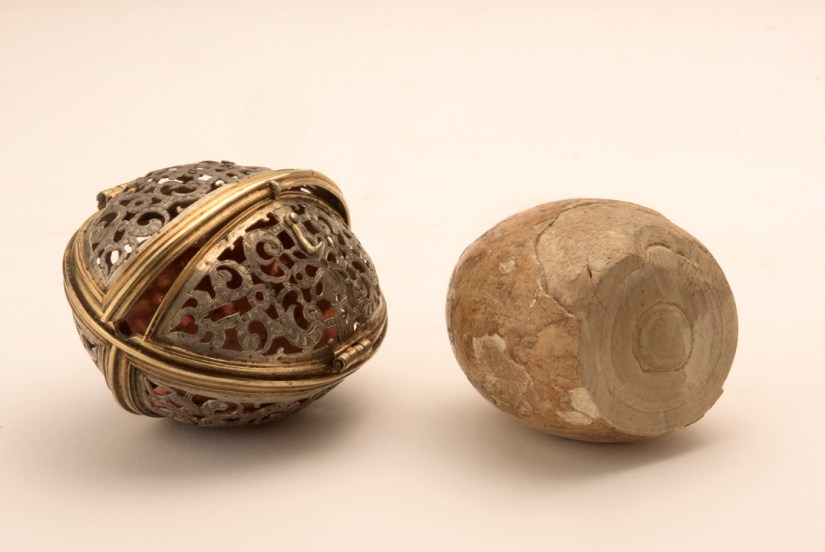
What is a bezoar?
A bezoar is a stone or stone-like mass found in the stomach or intestines of a living creature. The term is derived from the bezoar goat, an animal in which these formations are particularly common. However, bezoars can also occur in many other animals, including humans.
Modern medical science now distinguishes between various types of bezoars, depending on their composition. Some form when an individual ingests hair (known as trichobezoars), others result from undigested plant material, medications, or substances such as lactose. It is important not to confuse a bezoar with a gastrolith, small stones that certain animals deliberately swallow to help grind and digest food within the stomach.
Bezoars in history and folklore
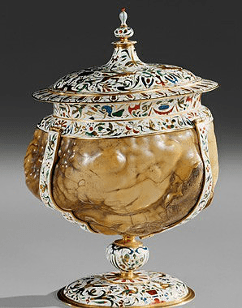
In the past, bezoars were believed to possess powerful magical and medicinal properties. Chief among these was their supposed ability to neutralise poison. According to legend, placing a bezoar in food or drink would cause any poison present to disappear. Understandably, this made bezoars highly sought after and immensely valuable. They were considered treasures, often kept in ornate containers or mounted in jewellery, such as rings.
Many royals and rulers of the past owned one or more bezoars. Queen Elizabeth I of England and Emperor Rudolf II of the Holy Roman Empire are both known to have had bezoars in their possession.
A myth debunked
Of course, we now know that bezoars do not actually counteract poison. The word bezoar comes from the Persian pād-zahr, meaning “antidote.” The belief in their protective powers spread from the East into Europe, where they were also highly valued in traditional Chinese medicine.
In the 16th century, a French surgeon named Ambroise Paré, who served several kings of France, set out to disprove the bezoar’s effectiveness. A cook, condemned to death for stealing silver, was given a choice: execution by hanging, or death by poisoning followed by treatment with a bezoar. If the bezoar worked, he would be granted his freedom.
Naturally, the cook chose the second option. He swallowed the poison, then received a bezoar. Sadly, the remedy failed. After suffering agonising pain, he died seven hours later. Paré had made his point: the bezoar was not a reliable antidote. Despite this grim experiment, belief in the power of the bezoar persisted well into the 18th century.
Frauds, fakes, and a famous court case
Bezoars became so popular and valuable that counterfeit versions flooded the market, proving that not much has changed in 300 years. One of the most notable historical court cases in England centred around just such a fake. The 1603 case of Chandelor v. Lopus involved the sale of a bezoar that turned out to be fraudulent. The buyer had paid the enormous sum of £100, a fortune at the time, and sued the seller in an attempt to recover his money.
However, the court ruled in favour of the seller. The buyer could not prove that the seller had knowingly sold a fake, nor was there a written contract guaranteeing the stone’s authenticity. This verdict was a blow to consumer protection and a boon to dishonest merchants. The case became famous not only for its outcome but also for giving rise to the legal principle known as caveat emptor, Latin for “let the buyer beware.”
The full Latin phrase is: Caveat emptor, quia ignorare non debuit quod jus alienum emit, which loosely translates as: “Let the buyer beware, for he ought not to be ignorant of what he is buying.” The principle assumes that the seller typically knows more about the item than he discloses, and that it is the buyer’s responsibility to investigate its condition. If the buyer later suffers loss, they generally have no legal recourse against the seller.
Fortunately, modern consumer protection laws have undergone significant changes since then, and buyers today are generally better protected against fraud. However, in the world of minerals and stones, caveat emptor still sadly holds all too often.
Goa Stones
To meet the high demand for bezoars, some were artificially produced, notably by Jesuit orders. These imitation bezoars became known as Goa stones, named after the Indian region of Goa where they were first made. The precise recipe for Goa stones was kept secret, and despite being artificial, they were highly valued and considered to be nearly as effective as the “real” ones.
Modern research and a hint of truth?
Surprisingly, more recent scientific studies have explored whether bezoars, particularly those formed from ingested hair, might possess any real detoxifying properties. Experiments have shown that certain bezoars can indeed affect water containing low levels of arsenic. Arsenic exists in solution as arsenate and arsenite. Arsenate can be removed by phosphates found in minerals that often occur in bezoars, while arsenite binds to sulphur released from decomposing hair. So, while bezoars may not be the miracle antidotes once believed, it seems there may be a kernel of truth
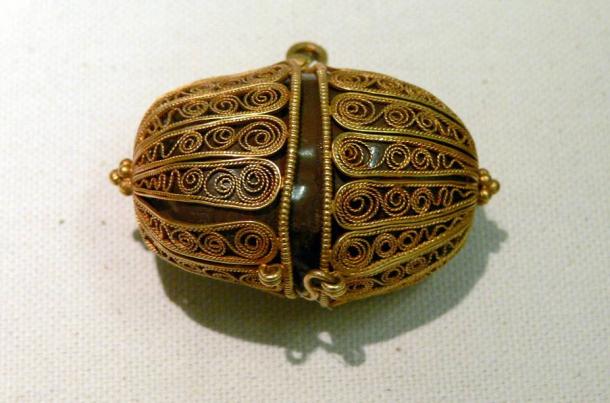
Toadstones and tongue stones
Let us return to the noble dining tables of the medieval and early modern period. Alongside the elaborately mounted bezoars, we find two other curious objects meant to protect diners from the ever-present threat of poisoning.
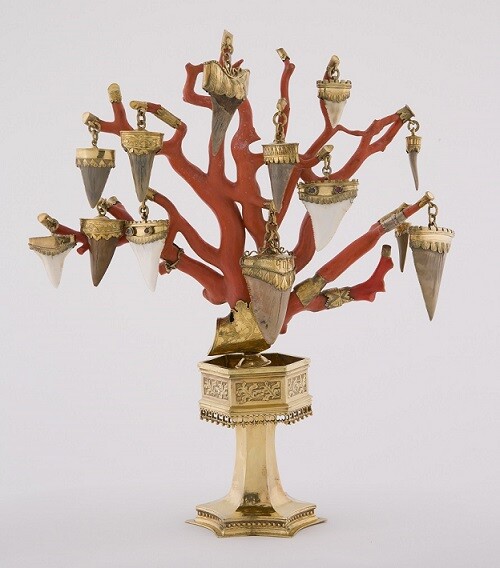
One common feature was a stand adorned with silver hooks, from which hung polished stones known as tongue stones or glossopetrae. These were, in fact, fossilised shark teeth. At the time, however, it was believed they were the petrified tongues of snakes.
According to legend, after the Apostle Paul was shipwrecked on Malta, he was bitten by a viper. He supposedly placed a curse on all the island’s snakes, turning their tongues to stone. These so-called “tongue stones” were said to be found embedded in the rock of Malta. Their perceived connection to venomous snakes led to the belief that they could protect against poisoning. Simply dipping one of these stones into food or drink was thought to neutralise any toxins present.
Tongue stones were not only found on the table; they were also worn on chains or brooches as protective amulets. Like many such remedies, they were also credited with guarding against a host of other afflictions, including plague, smallpox, and fever.
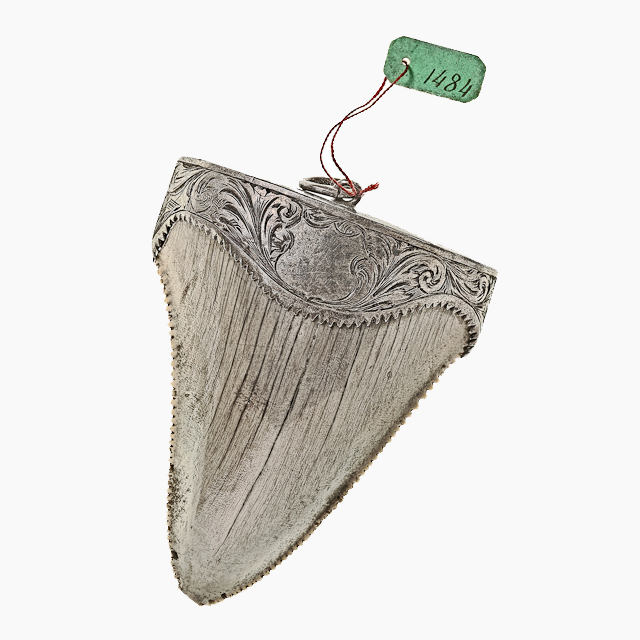
In the German-speaking world, these shark teeth were known as Zungensteine or Natternzungen, and the ornate stands that held them were referred to as Natternzungen-Kredenz. Several beautiful examples of these table ornaments have survived and are preserved in museums.
Germanic folklore added a mythological twist, claiming that these teeth fell from the sky during the waning moon, as the Mondhund or Mondwolf (moon hound or moon wolf) battled with the moon, a reference to the old belief that the moon was being devoured. This legend is an echo of Norse mythology, particularly the Edda tales of Hati and Managarm, celestial wolves who chase the sun and moon.
The toadstone
William Shakespeare made a poetic reference to this curious object in As You Like It (1599):
“Sweet are the uses of adversity, which, like the toad, ugly and venomous, Wears yet a precious jewel in his head.”
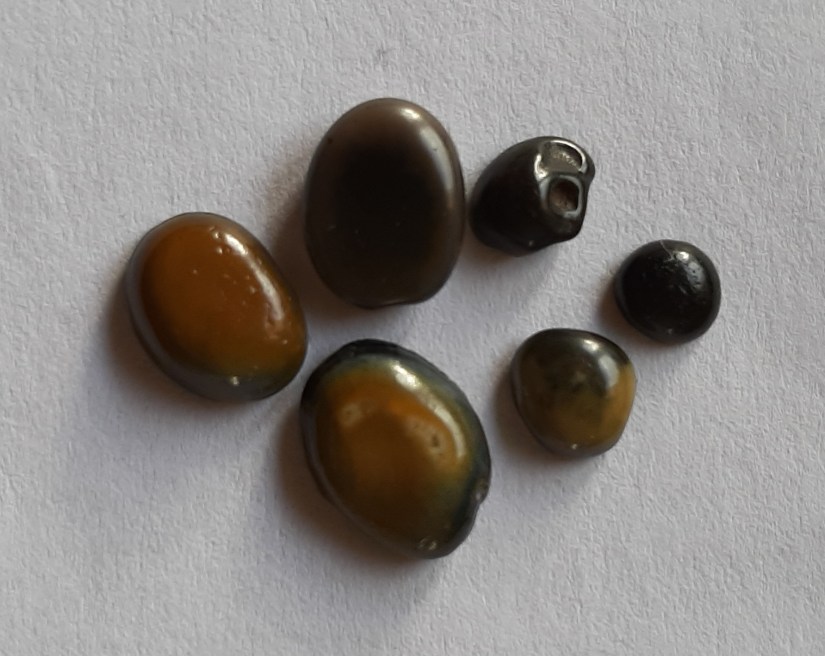
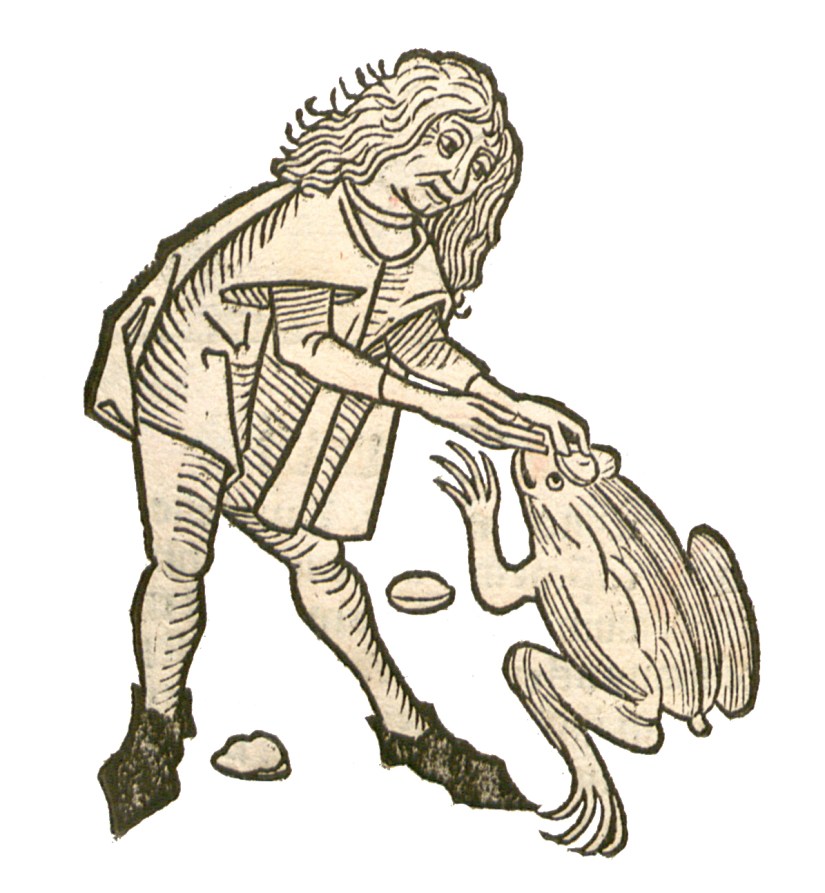
In earlier centuries, it was widely believed that frogs and toads were poisonous creatures. As a result, people imagined that a magical stone grew in their heads, a kind of natural antidote to the animal’s own venom. These were known as toadstones or bufonites.
Pliny the Elder mentioned them in his Natural History, and over time they became highly prized talismans believed to protect the wearer from misfortune, especially poisoning. When near a toxic substance, the toadstone was said to grow warm or change colour, thus warning its owner. If ingested, it was thought to cleanse the stomach and bowels of impurities.
These so-called toadstones were fossilised teeth of the prehistoric fish Lepidotes (now reclassified as Scheenstia), a creature with jaws full of smooth, rounded crushing teeth. These fossils were often set into rings and amulets. According to ancient texts, the stone had to be extracted from a living toad during a waning moon, adding a further layer of ritual and mystique.
Toadstones were set into a number of important historical artefacts, including the crown of Emperor Charles IV of the Holy Roman Empire, the Shrine of Saint Maurus, and even a drinking flask once owned by Mary, Queen of Scots. The British Museum today holds a notable collection of antique rings set with these so-called magical stones.
Other “anti-poison” stones and objects
The three examples above, bezoars, tongue stones, and toadstones, were among the most popular antidotal items in Europe for centuries. However, they were by no means the only ones. Various other stones and materials were also believed to protect against poisoning. These included drinking vessels carved from rock crystal or jade. Sapphires and emeralds were thought to have purifying properties.
And even the famous “unicorn horn”, which was often, in reality, a narwhal tusk (not a stone, strictly speaking, but a fascinating inclusion nonetheless)
Fortunately, modern science has replaced superstition in the treatment of toxins and diseases. But the fascination with these magical stones serves as a compelling reminder of how humans have long sought protection, often through objects that, though misunderstood, were revered for their mystery and power.
 Puffins and Pies