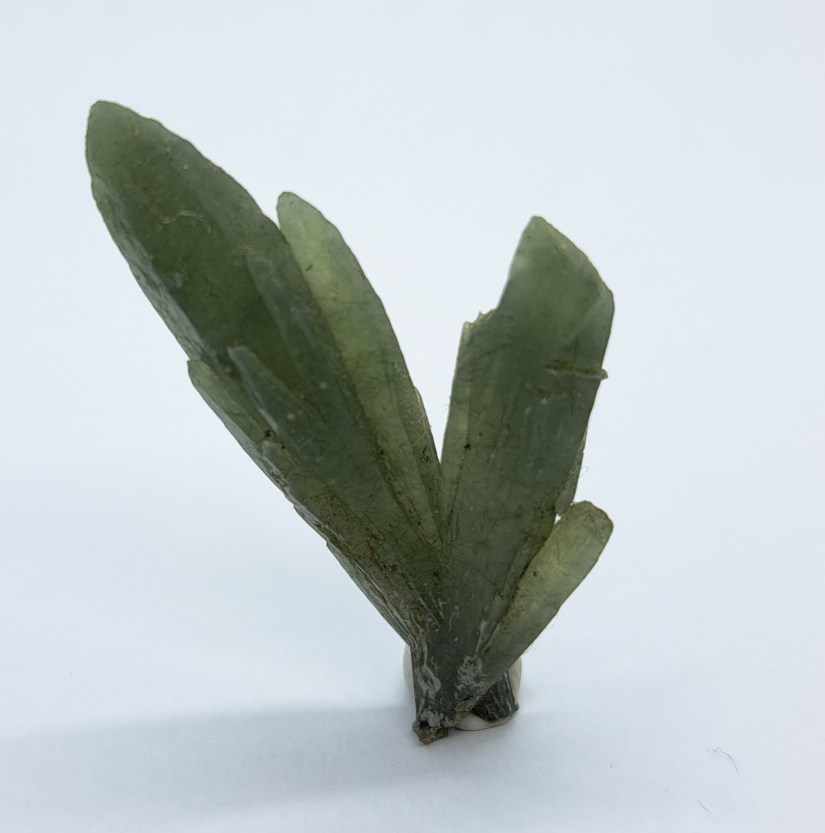
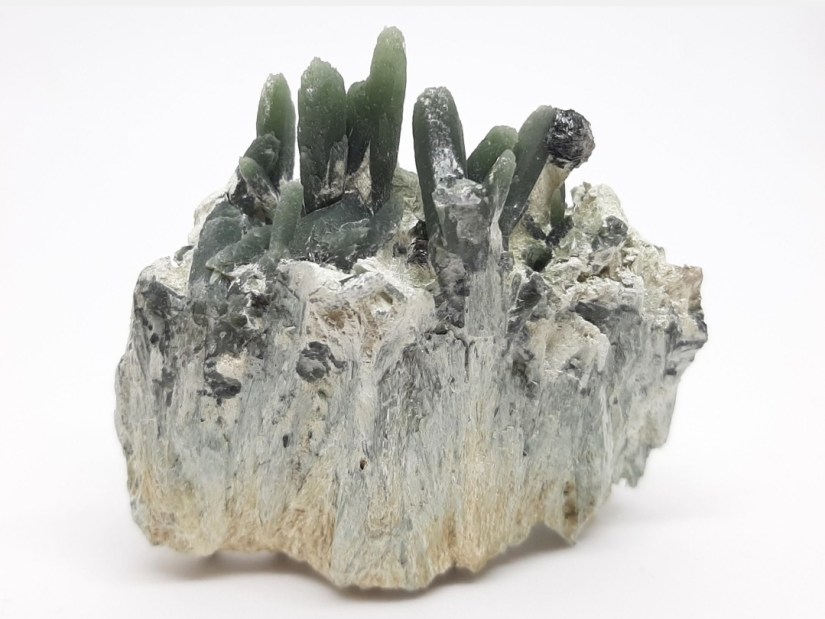
Prase is an unofficial name for a certain type of green (leek-green according to the definition) quartz.
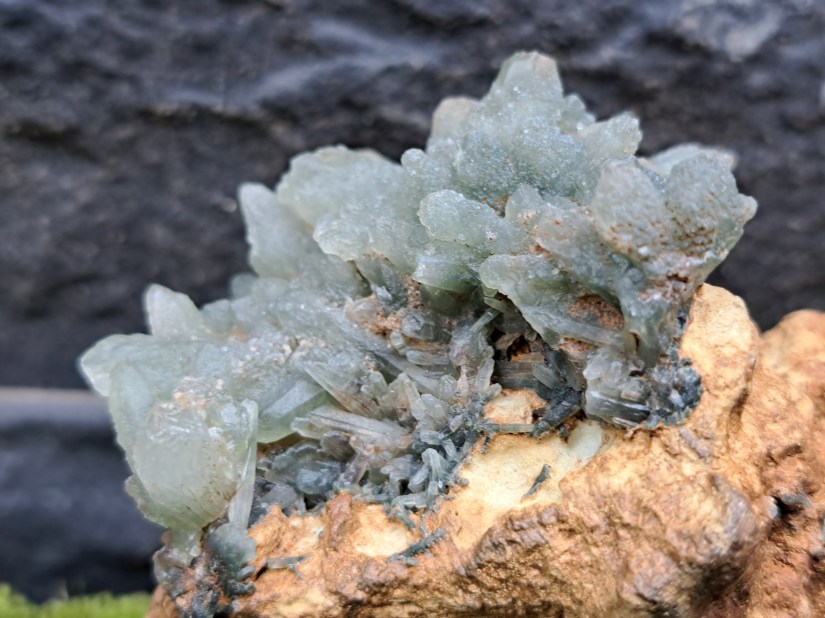
In the past, the term was used for green quartzitic rock. Or, if you use the old German definition, a quartz that owes its green color to actinolite.
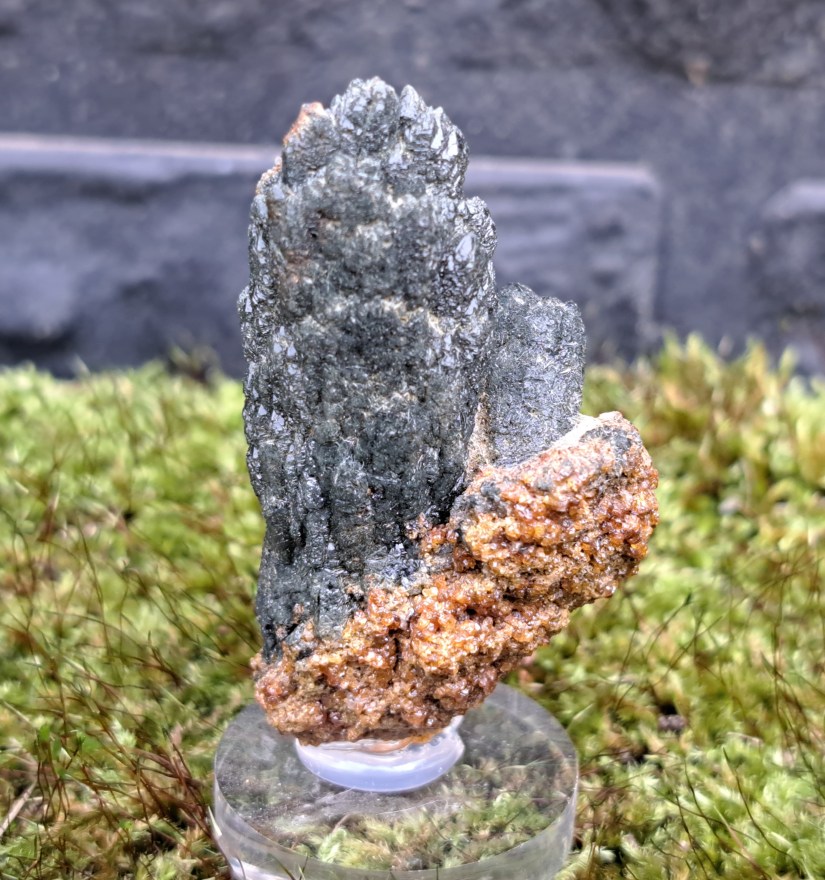
In the old days the name was used for all kinds of green quartz. Nowadays it is used for macrocrystalline quartz that owes its green colour to inclusions of actinolite (crossite). Sometimes hedenbergite is also mentioned as colour source. The best-known prase comes from Greece (Serifos) and often has an atypical crystal shape (tapering point or slightly convex) instead of the characteristic hexagonal crystals that you normally see in quartz. Research into this green quartz has shown that the colour in this type is indeed because of two generations of actinolite (On the colour and genesis of Prase (Green Quartz) and Amethyst from the Island of Serifos, Cyclades, Greece. Klemme et all.)
Prase therefore owes its colour to an enclosed other mineral, not to a foreign element that occupies a place in the crystal lattice. There are of course more green minerals that can be enclosed in quartz (think of epidote or chlorite), but we do not call those prase. Actually, prase is a somewhat difficult term because it is not a recognized name and has no clear description.
Prase mainly occurs in so-called ‘skarn’. This is a metamorphic rock that is formed when carbonate rock comes into contact with (underlying) hot magma.

 Puffins and Pies