
Beyond Physical Dilemma Stones
In addition to the physical dilemma of stones we’ve just discussed, there are other dilemmas associated with collecting minerals. I have written on several occasions about the impact that mineral collecting can have on both nature and human communities. Whether or not you choose to engage with this dilemma is entirely up to you. Much has already been said about the environmental consequences of mineral extraction and the often difficult working conditions under which minerals are mined in certain countries.
However, in today’s world, we are faced with a number of new dilemmas related to minerals. These may not yet directly affect us as small-scale collectors, but they are certainly important topics worth reflecting on.
The news is filled with reports about the energy transition and the increasing reliance on alternative energy sources. Minerals play a crucial role in this process. Quite simply, there can be no energy transition without minerals. The key minerals required for this shift are often referred to as critical raw materials.
I would like to guide you through some of these minerals, which will play an essential role in the future of the energy transition. Their significance will likely lead to an increase in mining activity across Europe, with new mines and quarries being developed, and old ones being reopened.
For the purpose of this discussion, we will set aside opinions on the energy transition itself and the various forms of new energy being introduced. We will also leave the broader climate debate to one side. Our focus here will be solely on the minerals involved and their role in shaping the future.
Lithium: A critical mineral for the energy transition
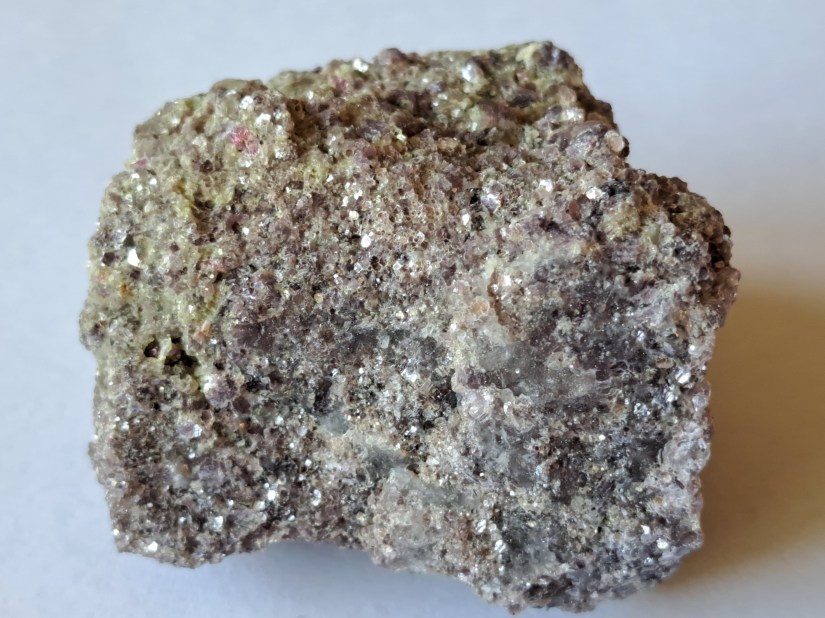
Perhaps the most well-known mineral frequently mentioned in the news as a key component of new energy technologies is lithium. Lithium is an essential element used in batteries, particularly those powering electric vehicles. It can be found in minerals such as spodumene and lepidolite.
At present, the most significant lithium mines are located in Australia and South America. In South America, there is a so-called “Lithium Triangle” spanning Chile, Argentina, and Bolivia, with Chile currently being the largest producer. China also plays a major role in global lithium mining. Due to its growing importance, lithium is often referred to today as “the new white gold.”
However, shifting global political dynamics are prompting countries to focus more on domestic resources. In response, Europe is actively exploring its own potential for lithium production. There are now lithium mining operations in countries such as Portugal, the Czech Republic, Finland, and Sweden. The Swedish site is relatively new and is accompanied by a large battery factory, underscoring the strategic importance of local supply chains.
Researchers are also investigating the possibility of extracting lithium from brine. Brine is a highly concentrated solution of salt in water. This is already being done in the United States, for example, at the Searles Lake salt flats, where lithium is extracted from the mineral halite. Similar opportunities are now being explored in Europe. In Germany, the Netherlands, England, and Poland, there are deep underground salt deposits. Plans are underway to construct a facility there that would extract salt from underground and then isolate lithium from those salt layers for use in industry.
One of the major drawbacks of lithium extraction today is that the process is not environmentally clean. At present, lithium can only be mined using machinery powered by fossil fuels, often including coal, a method that is clearly not in line with sustainable practices. This presents a striking contradiction, given that lithium is widely promoted as a key material in the energy transition for a cleaner future.
On a positive note, lithium itself is recyclable. Once a battery or accumulator has reached the end of its useful life, the lithium it contains can be reused, provided that it is processed and recovered correctly. However, the initial extraction of lithium from the earth remains a highly polluting process, and this is a significant issue that must be addressed moving forward. This is where lithium extraction from salt (or brine) comes into play. This method is considered a cleaner alternative to traditional mining, and researchers and industry experts are now working to make it even more environmentally friendly, intending to reduce its impact on the natural world as much as possible.
Europe’s manganese challenge: Between demand and responsibility
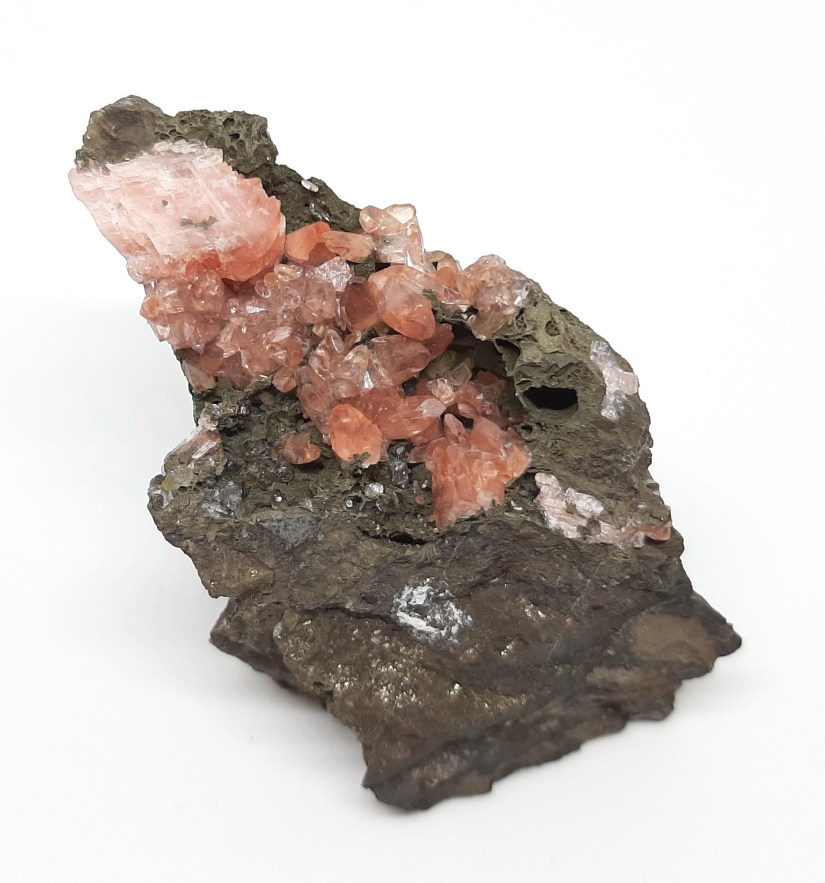
Another important element in our energy transition is manganese. Manganese is extracted primarily from minerals such as psilomelane, pyrolusite and, to a lesser extent, rhodochrosite. Unfortunately, Europe possesses very limited reserves of manganese, making us heavily reliant on imports. South Africa is the world’s largest supplier of manganese. The Netherlands ranks as one of the top importers, being the third-largest globally. In fact, 70% of all the manganese we use originates from South Africa.
Manganese plays a crucial role in both the steel industry and the production of batteries and accumulators, two sectors that are vital to the energy transition. For example, manganese is an important component in metal alloys used in the construction of wind turbines.
However, the working conditions under which manganese is mined in South Africa are widely regarded as poor. Several studies have highlighted both the inadequate labour conditions and the substandard environmental practices associated with its extraction.
Currently, Europe lacks the capability to mine manganese on a significant scale. One notable exception is a project in the Czech Republic, where manganese is not extracted through traditional mining. Instead, it is recovered from waste deposits left behind by defunct mines, essentially, manganese is retrieved from old spoil heaps.
Ukraine, a country currently the focus of much international attention, is known to have substantial manganese reserves in its soil. In addition, there are vast quantities of manganese lying on the ocean floor, in the form of so-called manganese nodules.
Cobalt: A critical element with a human cost
Cobalt is another element that plays a significant role in our emerging energy systems and has been the subject of considerable attention for many years. The largest known reserves of cobalt are found in the Democratic Republic of Congo (DRC), where mining occurs under extremely poor and often inhumane conditions. Workers frequently suffer from serious health problems, and children born in mining communities are sometimes deformed. The human cost of cobalt extraction in this region is deeply troubling.
Besides the DRC, cobalt is also found in countries such as Russia, Cuba, Madagascar, Canada, and Australia. However, Europe remains relatively poor in cobalt resources. While cobalt was historically mined in parts of Germany, particularly in Saxony, and Sweden, the quantities available today are insufficient to meet current demand. Deposits in Scandinavia are being explored regarding new mining activities. But they are probably not large enough to meet our future demands.
Cobalt is widely used in the production of batteries, metal alloys, and numerous products essential to modern society. As such, the global demand for cobalt is substantial and growing rapidly. Most cobalt mined in Congo is refined in China, which then exports it, making China a dominant player in the global cobalt trade.
In addition to cobalt, many other minerals are essential for a sustainable energy future, including aluminium, chromium, copper, graphite, indium, iron, lead, nickel, silver, titanium, and zinc. Among these, lithium, graphite, cobalt, and aluminium are categorised as ‘high-impact minerals’, with demand expected to increase sharply in the near future.
Rare Earth Elements: The backbone of modern technology
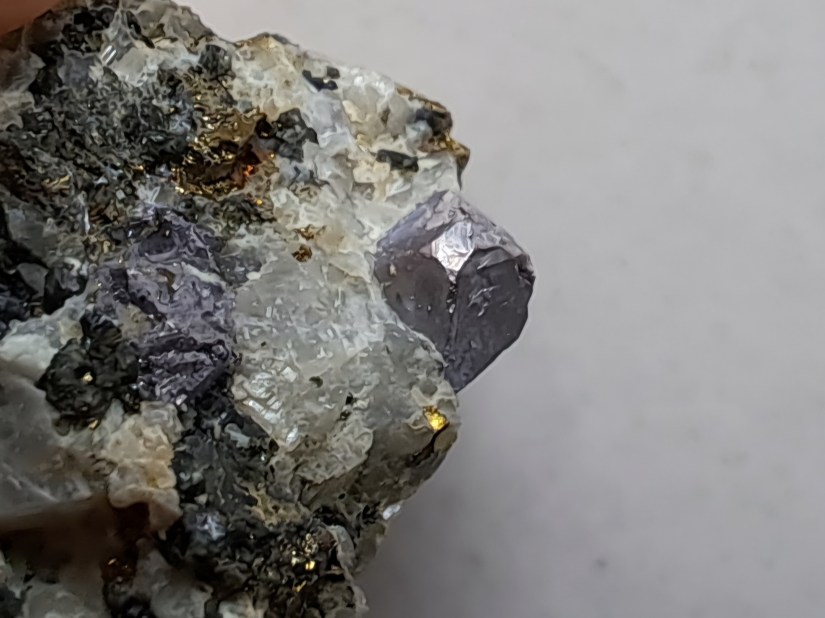
One group of minerals that has attracted significant attention recently is the Rare Earth Elements (REEs). These elements are relatively scarce in the Earth’s crust, or at least were thought to be, and are essential components in many of today’s technologies. In fact, the very device you are using to read this text likely contains several of these elements.
The rarity of these elements makes them highly sought after, which in turn drives up their cost. Consequently, countries rich in rare earth minerals hold considerable geopolitical and economic influence.
The Rare Earth Elements include:
yttrium, neodymium, scandium, lanthanum, cerium, praseodymium, promethium, samarium, europium, gadolinium, terbium, dysprosium, holmium, erbium, thulium, ytterbium, and lutetium.
These minerals are indispensable for various high-tech applications, from smartphones and electric vehicles to wind turbines and military equipment, underscoring their strategic importance in the global transition towards sustainable energy and advanced technology.
Never heard of them before? That’s understandable, after all, they are called ‘rare’ for a reason. They are not everyday materials, yet most of us use many of them daily. More on that shortly. The term ‘rare’ is relative. For example, cerium is actually more abundant in the Earth’s crust than the well-known metal copper. It ranks as the 25th most common element on Earth. Gem cutters, for instance, will recognise cerium oxide as the polishing powder used in the final stage of polishing.
Most rare earth elements belong to the group known as the lanthanides, a series of elements with very similar chemical properties, particularly in how their electrons are arranged in shells.
It might have caught your attention that a new source of these elements was recently discovered in Sweden, with hopes that it will be suitable for exploration. For anyone with some knowledge of geology, this will come as no surprise. Many of these rare elements were first discovered in Sweden and are named after places, people, or folklore related to Scandinavia.
One notable mineral is gadolinite (also known as ytterbite), which contains a significant proportion of these elements. The type locality for this mineral is Ytterby, Sweden. Many of the rare earth elements were first identified and described in the quartz and feldspar mines of this region. Ytterby is located in southern Sweden, not far from Stockholm.
The recently discovered deposit, however, is near Kiruna in the north—a region already known for its iron, phosphate, and magnetite mines. Other minerals containing rare earth elements include bastnäsite, loparite, monazite, and eudialyte.

The majority of the world’s Rare Earth Element (REE) reserves are located in China. China supplies approximately 80 to 98% of the global demand for these critical minerals. Recently, much attention has been given in the news to the strategic advantage this dominance provides China.
Neodymium, in particular, is a highly sought-after and widely used element, almost entirely sourced from China. It is indispensable in the manufacture of ultra-strong magnets used in wind turbines. As we aim to build large-scale wind farms to meet our renewable energy goals, the demand for neodymium continues to grow.
It goes without saying that this creates a significant dependency of the Western world on China for these crucial materials. China is well aware of this leverage and has occasionally used rare earth elements as a bargaining chip in geopolitical disputes with other countries.
Other countries with extractable deposits of Rare Earth Elements (REEs) include Russia, India, and Brazil. Within Europe, besides Sweden, several countries hold REE reserves, such as the United Kingdom, Norway, Finland, France, Spain, and Portugal. Greenland also contains significant quantities of REEs and, in many respects, is considered part of Denmark, and thus Europe.
Without delving too deeply into politics during a mineralogy lesson, it is important to recognise that the current situation cannot be separated from international relations and geopolitics. The raw materials necessary for modern technology and the energy transition are often central to government negotiations and have even been causes of conflict. When discussing so-called ‘dilemma minerals’, these certainly belong in that category.
The reality of mining and the importance of recycling
If you think this is something far removed from everyday life, consider just how many elements are found in a typical mobile phone: silicon, iron, copper, aluminium, calcium, chromium, carbon, nickel, tin, indium, germanium, antimony, niobium, tantalum, molybdenum, cobalt, tungsten, silver, gold, dysprosium, gadolinium, praseodymium, and neodymium. That’s quite an impressive list!
Mining has never been a sustainable activity. Unlike planting a new tree to replace one that’s been cut down, the raw materials extracted from mines cannot be replenished. So, although we mine these materials to enable the generation of sustainable energy, mining itself remains far from sustainable. The extraction process invariably harms the environment, and these resources are finite; they will eventually run out.
Fortunately, Europe has strict regulations regarding the environmental impact of mining. Without a thorough impact assessment, mining projects cannot receive permits. However, outside Europe, where most raw materials are sourced, such protections are often lacking, and the welfare of people and nature may be disregarded.
If you want to help address these issues, recycling is a very effective option. Your old devices are literally and figuratively small gold mines. Almost all metals can be recycled, meaning less needs to be extracted from the Earth.
 Puffins and Pies